
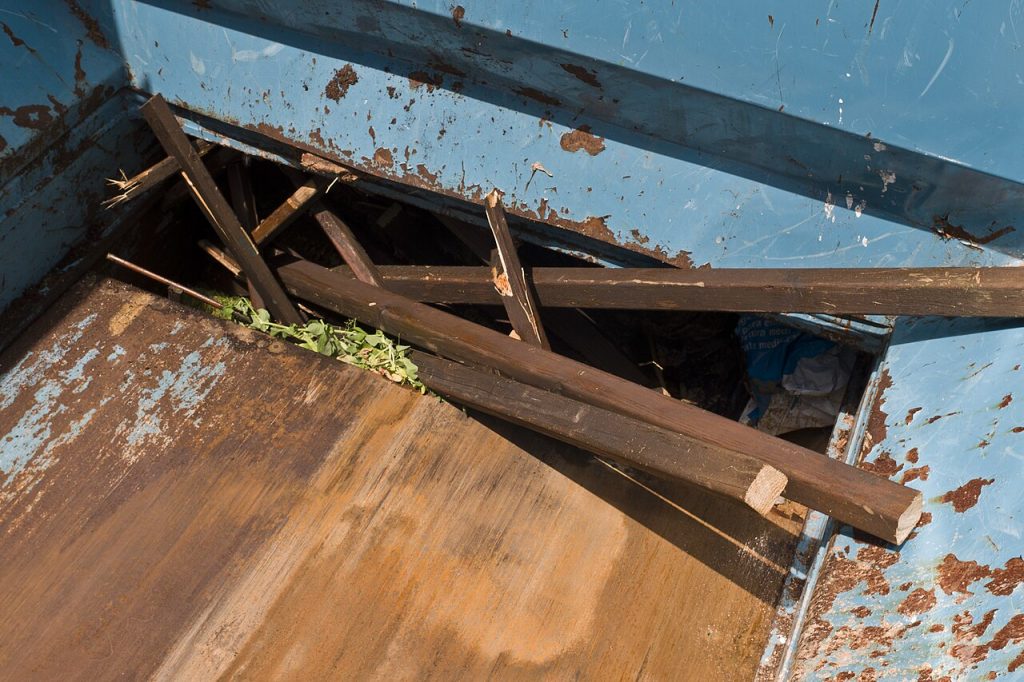
Frequent problem: A compactor that overflows on Friday evening is often only detected on Monday morning — with direct consequences for operations and costs.
Managing waste compactors is a major operational challenge for equipment fleet managers. Contrary to popular belief, it is not the machine itself that is the problem, but its silence between two interventions. A compactor that reports its state only when an agent travels to the site generates delays, unnecessary trips and avoidable emergencies.
The real cost of an undetected full-capacity condition
When a compactor reaches its maximum capacity without an alert, several cost mechanisms kick in automatically. First, there is the risk of clogging the collection network: nearby bins have to absorb the overflow, which ties up resources planned for other rounds. Then comes the accelerated wear of the ram and the press, because a compactor that keeps running at full load pushes its components beyond their rated limits. Finally, emergency intervention far exceeds any planned maintenance budget: a technician dispatched in a crisis costs on average two to three times the rate of a planned intervention.
Field feedback shows a recurring pattern: failures occur at weekends or on public holidays, when nobody is on site to hear an unusual noise or notice a difficult start-up. On Sunday evening, the compactor may display an error code, but without remote supervision, the maintenance team will only see it on the first phone call on Monday.
Preventive maintenance: anticipation as an economic lever
Preventive maintenance rests on a simple principle: intervene before the breakdown, not after. Applied to compactors, this means being able to check the equipment’s state at any time, receive alerts in the event of abnormal behaviour, and schedule technical visits according to real needs rather than an arbitrary calendar.
A connected telemanagement platform makes exactly this tracking possible. The data collected by the built-in sensors automatically alerts the manager as soon as a threshold is crossed — whether it is the fill level, the ram temperature or a cycle fault. This real-time visibility turns reactive management into proactive management.
The concrete benefits for your operation
- Fewer unnecessary trips: only the necessary interventions trigger a site visit, eliminating empty inspection rounds.
- Better planning of emptyings: historical fill data makes it possible to optimise the collection schedule, avoiding rounds that are too frequent or too late.
- Longer equipment life: operation within tighter rated ranges puts less stress on mechanical components, reducing premature wear.
- Centralised visibility: from a single dashboard, you monitor the state of your entire fleet, wherever you are.
To see how this works in practice, explore our remote monitoring solution for waste compactors.
À lire aussi
- Industrial waste compactors: complete guide to types, selection criteria and m
- Industrial waste telemanagement: monitor your compactors and bins from a dashb
- How much does a telemanagement system for compactors cost in 2026?
Un besoin similaire sur votre parc ?
Échangeons 10 minutes — sans engagement
Parlons de votre besoin →