
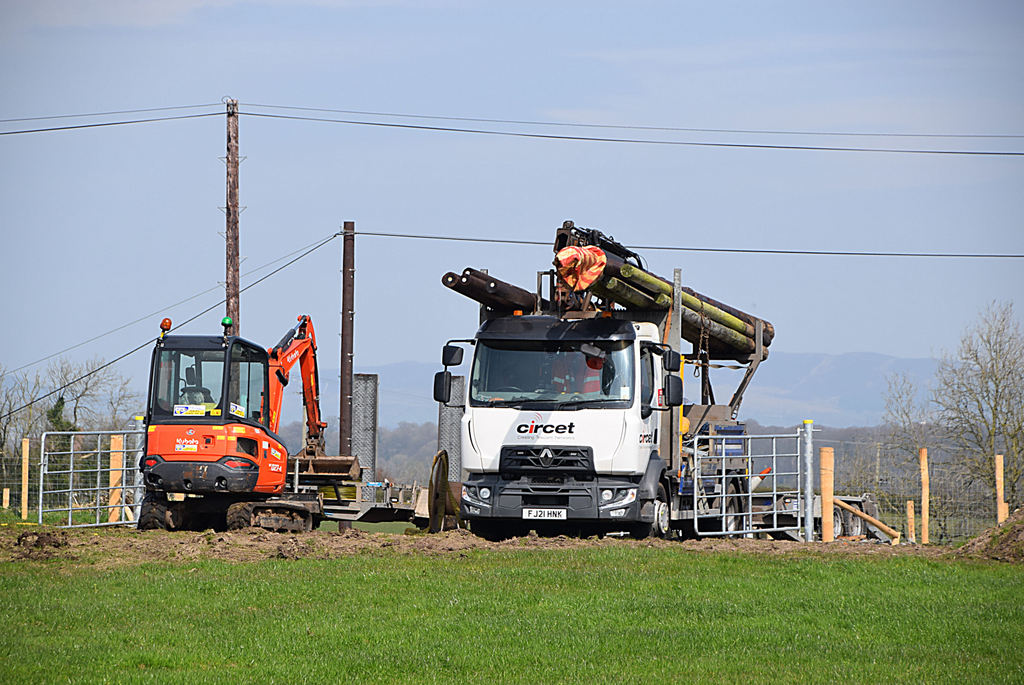
On a construction site, a machine that stops working at the wrong time can halt an entire sequence of work. Excavators, loaders, dump trucks, light vehicles: each piece of equipment spread across multiple sites represents a significant investment, but also a permanent operational risk. When equipment disappears, breaks down, or sits idle, the entire site planning is weakened.
Dispersed equipment, reduced visibility
Construction and public works companies often manage large fleets, spread across multiple sites, warehouses, and workshops. The same machine can change sites several times a week. In this context, knowing where each machine is, what condition it is in, and whether it is actually being used becomes a daily challenge for fleet managers and project leaders.
The problem is not limited to location tracking. A machine may be present on site but unused for several days, yet still consuming tracking, insurance and maintenance resources. Conversely, an undetected breakdown can immobilise an entire team and delay the delivery of a work package. For managers, this lack of visibility translates into decisions made with partial information, increasing the risk of extra costs and delays.
Geographic dispersion also complicates team coordination. A project manager may need a specific machine that is on another site, without the information reaching them quickly enough. The result: unnecessary trips, last-minute rentals, or delays in completing the most critical tasks.
The hidden cost of downtime and theft
Every day a machine is unavailable, a team is waiting, a schedule slips, and costs rise. Renting replacement equipment, dispatching a technical team, or delaying a site represent expenses that are difficult to anticipate. Added to this are thefts, particularly frequent on open sites, which deprive the company of an essential work tool and generate long administrative procedures. For more on protecting construction equipment, see our article on protecting your mobile fleet with remote monitoring.
The residual value of the fleet is also affected. A poorly maintained, overused or long-unused machine loses value more quickly. For managers, maintaining a fleet in good condition while controlling operating costs is therefore a strategic challenge that goes beyond simple geographic tracking. Better knowledge of actual usage makes it possible to optimise maintenance cycles and extend equipment lifespan.
An approach tailored to your business needs
The telemanagement platform, proven on industrial compactors, can be adapted to meet the specific needs of construction and public works companies. The objective is simple: to give fleet managers a clear view of the status and position of their equipment, without unnecessary technical complexity. This approach relies on solid field expertise, developed over the years on demanding equipment.
This solution can be configured to track construction vehicles and equipment across multiple sites, monitor their activity, detect anomalies, and alert teams to unusual behaviour. It integrates into existing processes and adapts to the diversity of equipment in a professional fleet. Each deployment is designed according to actual usage and the company’s priorities.
For companies managing equipment across multiple simultaneous sites, this visibility allows for better resource allocation, anticipation of maintenance, and faster response to incidents. Field teams gain autonomy, while managers have reliable indicators to steer their operations. Decision-making is faster and better supported.
Concrete benefits for your operations
By having a real-time view of your mobile fleet, you can reduce downtime, optimise the use of each machine, and better plan maintenance interventions. Early detection of anomalies allows intervention before a breakdown stops a site, limiting repair costs and delays. This anticipation is particularly valuable on operations where deadlines are tight and margins are narrow.
Equipment security is also enhanced. An alert for unusual movement or exit from a defined zone allows for rapid response and limits the risk of theft. This vigilance also helps protect the value of your fleet over the long term. Teams can focus on their core business, confident that critical equipment is being monitored.
Beyond security, better knowledge of the actual use of your equipment helps you size your fleet accurately. You can identify underused equipment, pool resources across sites, and make more informed purchase or renewal decisions. This approach delivers significant savings while improving service quality.
The precise information flow also facilitates dialogue between field teams, fleet managers, and management. Everyone has access to the same data to evaluate fleet performance, identify improvement opportunities, and track progress over time. This transparency fosters a culture of efficiency and shared responsibility.
A progressive transition towards greater control
Implementing fleet tracking does not require overhauling your organisation. A progressive approach, starting with the most critical or most exposed equipment, quickly measures benefits and adjusts the system to your real needs. Teams adopt the tools step by step, without disruption to their daily activities. This controlled progression limits risk and ensures lasting adoption.
For construction and public works companies, controlling your equipment fleet becomes a competitive advantage. It allows you to gain responsiveness, secure your investments, and improve the profitability of each site. The telemanagement platform, proven on industrial compactors, which we can adapt to your needs, is a simple and effective lever to achieve these objectives, while providing a solid foundation to support your business growth.
Related reading
- How IoT transforms industrial maintenance — sensors, protocols and architectures
- Edge Computing for Industrial IoT: architecture, protocols and deployment strategies
- Industrial traceability with IoT: from raw material to finished product
Un besoin similaire sur votre parc ?
Échangeons 10 minutes — sans engagement
Parlons de votre besoin →