
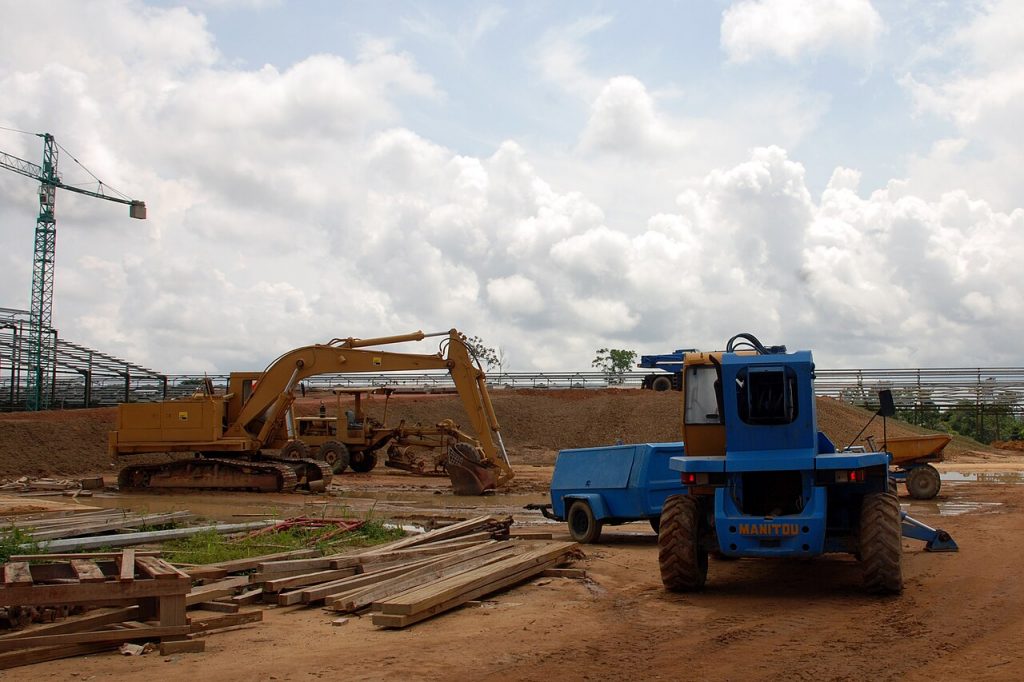
On a construction site, a machine is not just a tool: it is a strategic asset. An excavator, a loader, a mobile crane or a compactor — each one represents tens of thousands of euros of investment, critical production capacity and a delivery schedule that allows no surprises. Yet equipment theft remains one of the least anticipated risks for operations managers, precisely because it seems remote… until the day it happens.
The hidden cost of equipment theft: much more than a replacement
The first instinct is to compare the purchase price of the stolen equipment with the cost of replacing it. But the reality is far heavier. A machine that disappears at the start of a project causes work delays, contractual late penalties, idle crews and sometimes a complete halt of activity in a given area. Rebuilding a fleet, reassigning tasks and negotiating a new schedule often take weeks, not days.
In addition to the value of the equipment, there is the impact on insurance, claims handling, reputation with project owners and the administrative burden of an unplanned stoppage. For a mid-sized project, a single theft can represent an indirect cost equal to — or even greater than — the purchase price of the equipment concerned. And that is without counting the human stress: a site manager who discovers the theft on a working morning has no time to negotiate; they must first secure the site, then manage the crisis.
Why visual or occasional surveillance is not enough
Many sites have set up guarding, fencing or access control. These measures are essential, but they are static. A machine can be moved between two patrols, transferred to another site or simply moved within the same area without being noticed. Visual surveillance gives no real-time alert, does not trace movement and does not allow intervention before the disappearance.
The problem is not a lack of vigilance: it is the absence of continuous visibility over the equipment fleet. When each machine is an isolated point, the operations manager has a fragmented picture. What is missing is the unified data that makes it possible to understand where each resource is, when it moved, and whether it is leaving an authorised zone.
An adaptable approach, not an off-the-shelf solution
At IOTINNOV, we do not sell an off-the-shelf solution for construction: our telemanagement platform, proven on industrial compactors, can be adapted to the specific needs of a site. What makes the difference is the ability to surface event-driven alerts — movement, zone exit, unusual stoppage, connection loss — on each connected piece of equipment, without having to replace the existing hardware.
For a construction site, this translates concretely into real-time visibility of the mobile fleet. The operations manager receives immediate notifications in the event of unplanned movement, can pinpoint the machine concerned and decide on an intervention. This capability does not replace the physical security of the site, but it considerably reduces the time between the start of a theft and its detection — and therefore the risk that it is carried through.
Our remote monitoring platform is designed to integrate with an existing fleet, whatever the type of equipment, and to surface useful data without burdening the site with new infrastructure. The aim is not to add another system, but to give the operations manager a unified view and useful alerts where they matter.
Three concrete levers to protect your fleet
- Continuous location — know the position of every machine, even across multi-site projects
- Geolocated alerts — be informed immediately if a piece of equipment leaves a defined zone
- Usable history — trace movements and usage cycles to anticipate instead of react
These levers do not change the nature of the risk, but they considerably reduce exposure. A theft detected quickly can be interrupted; a theft that goes unnoticed for hours becomes very difficult to recover. The difference between these two scenarios does not lie in the complexity of the system, but in the speed of the response — and that is precisely what connected remote monitoring can improve.
Construction and public works are sectors where responsiveness is a competitive advantage. Protecting your machines means protecting your ability to meet your deadlines. And it starts with a visibility that traditional surveillance does not provide.
The same logic applies to vehicles and rolling fleets: our article on vehicle monitoring and export outside the European Union details how a geofence exit alert makes it possible to act before the vehicle leaves the territory.
The same approach applies to compactors and mobile equipment — see our compactor monitoring solution.
À lire aussi
- Edge Computing for Industrial IoT: Architecture, Protocols, and Deployment Str
- Professional Embedded Debugging: JTAG, OpenOCD and GDB — The Complete Workflow
- Generative AI for Industry: Concrete Use Cases, RAG Architecture and Return on
Un besoin similaire sur votre parc ?
Échangeons 10 minutes — sans engagement
Parlons de votre besoin →