
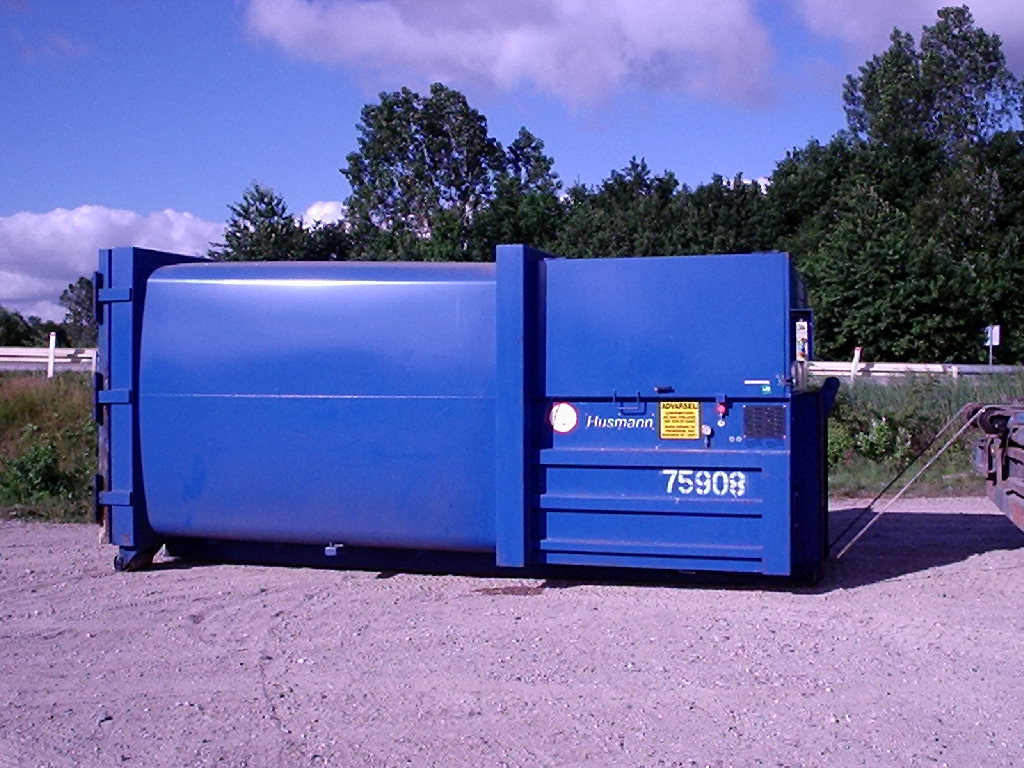
A compactor breakdown is rarely a surprise. The weekend, Monday morning, the day you already have a full load of files to deal with: that is always when the machine stops working. And that is always when you realise you had no visibility into its condition before the failure.
Why an undetected breakdown costs more than it looks
The direct cost is the call-out. A technician on site at the weekend or in the evening for an intervention that could have been avoided if you had known the compactor was approaching its limit. Every unplanned call-out means an hourly cost, kilometres driven, and a technician pulled away from a scheduled maintenance job elsewhere.
The second cost is downtime. A compactor that no longer compacts means a waste stream piling up. Bins fill faster, containers overflow, and activity on site slows down. On a fast-moving site, a single hour of stoppage can produce consequences that last for days.
The third cost — the most discreet, but the heaviest — is the lack of information. Without an alert history, without any knowledge of fill trends, you run your fleet blind. Collection rounds are planned on gut feeling, and maintenance intervals are set by the calendar rather than by the real condition of the equipment. That inertia is what ends up costing dearly: too many pointless collections, not enough preventive maintenance, and breakdowns that always happen at the worst possible moment.
The solution: a remote supervision system
Our connected system places each compactor at the centre of a chain of vigilance. Smart sensors continuously measure the parameters that matter: fill level, operating state, hydraulic pressure, temperature. That data is transmitted in real time to a centralised dashboard, accessible from your office or your phone.
The concrete result: you receive an alert before the breakdown occurs. A sensor detects a budding anomaly, and a notification warns you immediately. No more intervening after the failure: you intervene beforehand. That is the difference between corrective maintenance (costly and disruptive) and preventive maintenance (inexpensive and protective).
Immediate benefits
- Fewer call-outs. No more out-of-schedule visits to check equipment that is working perfectly. You intervene where it is needed, when it is needed.
- Controlled downtime. A failure is detected as soon as it appears. Downtime is measured, not endured.
- Optimised round planning. The fill-level history tells you which bins to empty first, and when. No more rounds based on the calendar or on gut feeling.
- Complete history for audits. Every alert, every event, every intervention is recorded. For certifications, tenders, or simply to understand trends, you have the data.
Stop paying for what you do not know
Every compactor still running without supervision is a missed opportunity. An undetected breakdown means a disorganised weekend, an unplanned call-out cost, and management that stays improvised. With a supervision system, you no longer react: you anticipate.
For a closer look at the equipment behind these alerts, see our compactor monitoring solution.
À lire aussi
- Industrial waste compactors: complete guide to types, selection criteria and m
- Industrial waste telemanagement: monitor your compactors and bins from a dashb
- How much does a telemanagement system for compactors cost in 2026?
Un besoin similaire sur votre parc ?
Échangeons 10 minutes — sans engagement
Parlons de votre besoin →