

Industrial and commercial buildings account for nearly 40% of global energy consumption. Faced with rising energy costs and increasing regulatory requirements, facility managers and operators are looking for concrete solutions to optimize their installations. The Internet of Things (IoT) has emerged as a major lever for transforming passive buildings into intelligent infrastructures capable of measuring, analyzing, and adjusting their operation in real time.
What is a smart building connected by IoT?
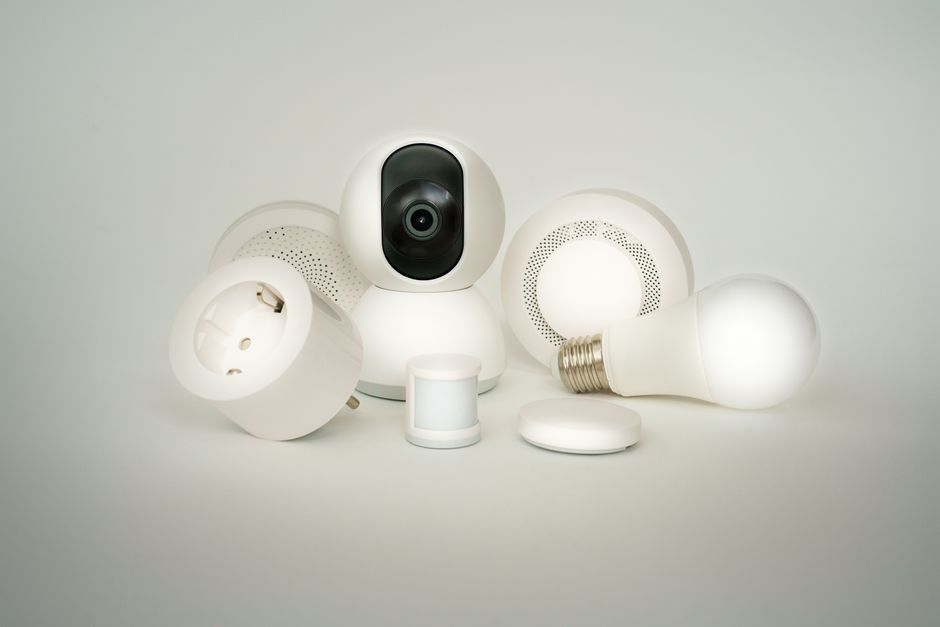
A smart building is a facility equipped with IoT sensors that collect data about its environment: temperature, humidity, lighting, air quality, electricity consumption, and space occupancy. This data is transmitted to a central platform that analyzes it and triggers automated actions: adjusting heating, turning off unused lights, alerting in case of anomalies.
Unlike a traditional Building Management System (BMS), which is often rigid and expensive to deploy, modern IoT solutions use wireless protocols such as LoRaWAN or NB-IoT. This makes it possible to equip existing buildings without heavy cabling work and to deploy hundreds of sensors at a controlled cost.

IoT sensors at the heart of energy efficiency
The main challenge of smart buildings remains energy consumption reduction. IoT sensors enable granular monitoring of temperature and humidity room by room. Instead of heating or cooling an entire building uniformly, the system adjusts parameters based on the actual occupancy of each zone.
The results are significant: buildings equipped with IoT regulation solutions achieve energy consumption reductions of between 20% and 35% on HVAC (heating, ventilation, air conditioning), which alone accounts for nearly half of a commercial building’s energy bill. Connected lighting, controlled by presence detection and natural light sensors, completes these gains.

Predictive maintenance of technical equipment
Beyond comfort and energy, IoT transforms equipment maintenance. Air handling units, chillers, elevators, and UPS systems can be continuously monitored by vibration, temperature, and current sensors.
When a sensor detects a drift — an abnormal temperature on a motor bearing, for example — an alert is sent before the equipment fails. The operator can schedule preventive intervention, thus avoiding costly downtime and degraded occupant comfort. This approach reduces maintenance costs by 15% to 25% according to industry feedback.

Optimized space management and occupancy
The scarcity of available space and the rise of telecommuting are pushing managers to optimize the use of square meters. IoT presence sensors — infrared detectors, people counters — provide real-time information on the occupancy rate of offices, meeting rooms, and common areas.
This data makes it possible to reallocate underutilized spaces, properly size HVAC and lighting installations, and even guide flex office policies. A building whose actual occupancy is known with precision avoids heating or cooling empty spaces, representing a considerable source of savings.

LPWAN connectivity: choosing the right network
To deploy hundreds of sensors in a building, choosing the right communication protocol is strategic. LPWAN (Low Power Wide Area Network) technologies like LoRaWAN and NB-IoT offer extended range and minimal power consumption, allowing sensors to operate for several years on battery.
LoRaWAN is particularly suited to large industrial buildings: its ability to penetrate thick walls and cover vast areas with a single gateway makes it a cost-effective solution. NB-IoT, which relies on existing cellular networks, is better suited to urban sites where 4G/5G coverage is dense. The choice depends on the context: surface area, sensor density, budget, and latency requirements.

Conclusion: the smart building is no longer an option
IoT applied to industrial and commercial buildings is no longer an emerging trend: it is an operational necessity. Energy consumption reduction, preventive maintenance, occupant comfort, and space optimization are all concrete benefits, accessible today with mature technologies deployable at a controlled cost.
The key to success lies in a progressive approach: start with a pilot in a targeted area, validate the gains, then expand the deployment. LPWAN protocols and falling sensor costs make this approach accessible even to medium-sized facilities.
At IOTINNOV, we support operators and facility managers in transforming their buildings into connected infrastructures. From auditing your installations to deploying sensors and centralized supervision, we help you at every step.
📩 Would you like to discuss your smart building project? Contact us to discuss your needs and discover how IoT can help you achieve concrete savings.
And you, in your facility, which energy expense items would you like to better control thanks to field data?
À lire aussi
- Edge Computing for Industrial IoT: Architecture, Protocols, and Deployment Str
- Professional Embedded Debugging: JTAG, OpenOCD and GDB — The Complete Workflow
- Generative AI for Industry: Concrete Use Cases, RAG Architecture and Return on
- Construction site monitoring: blind spots that cost you
Un besoin similaire sur votre parc ?
Échangeons 10 minutes — sans engagement
Parlons de votre besoin →