

Waste Collection: A Daily Challenge for Operations Managers
As an operations manager in the waste sector, you know better than anyone: every route is a complex equation. Between variations in bin fill levels, unexpected field conditions, regulatory constraints, and pressure on fuel costs, optimizing collections can sometimes feel like a puzzle. Yet a concrete solution has been emerging in the sector for several years: industrial IoT.
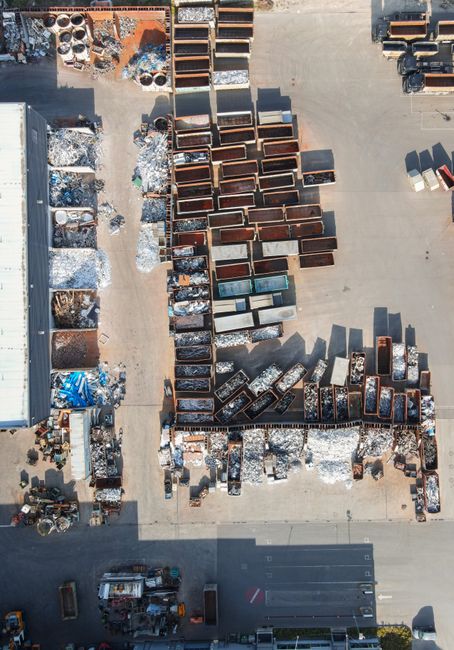
IoT at the Service of Waste Management: What Does It Actually Change?
The Internet of Things (IoT) makes it possible to equip bins and compactors with smart sensors that measure their fill level, location, and operating status in real time. Concretely, no more empty runs because a bin was half-full, or overflowing bins barely avoided because a compactor reached capacity without warning.
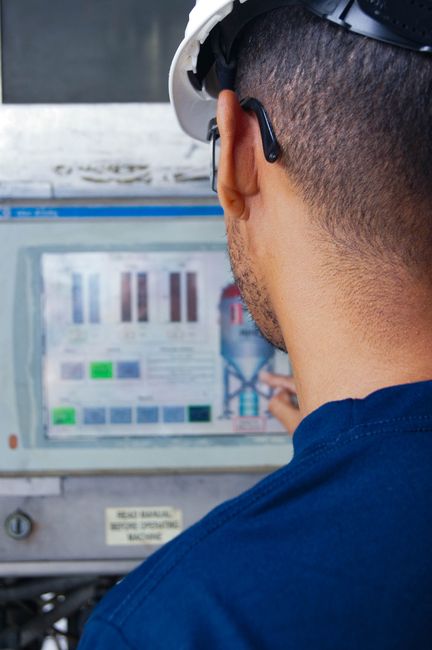
The data collected by these sensors feeds a supervision platform that gives operations managers a clear, up-to-date view of their fleet. No more calling each driver to find out where they are: field status is displayed on a centralized dashboard.
Reduce Operational Costs Without Sacrificing Service Quality
One of the first concrete benefits of IoT in waste collection is the significant reduction in operational costs. When you know the weight of fuel in a collection fleet’s budget, every kilometer saved counts. By collecting only bins that have reached a defined fill threshold (e.g., 3/4 full), you avoid unnecessary trips and concentrate resources where they’re truly needed.
Sector feedback shows that a data-driven approach to collection can reduce the number of routes by 20 to 30% while maintaining — or even improving — service quality. For a local authority or private operator, this translates into tangible savings on fuel, vehicle wear and tear, and labor time.
Make Reporting More Reliable and Meet Regulatory Obligations
Local authorities and operators are increasingly subject to reporting obligations regarding their collection activity. Fill rates, collection frequencies, carbon footprints, performance indicators: all this data must be provided to supervisory authorities or as part of public contracts.
With IoT, this data is no longer estimated or manually recorded: it is measured continuously and automatically archived. Operations managers can produce reliable, detailed reports in just a few clicks, without spending hours compiling paper route sheets or field notes.
This reporting reliability also strengthens the operator’s credibility during public contract renewals. Being able to demonstrate, with concrete figures, the efficiency of their routes and cost control is a significant competitive advantage.
Anticipate Breakdowns and Improve Fleet Availability
Another often underestimated advantage of IoT in waste management: predictive maintenance. Connected compactors and bins don’t just measure fill levels: they also monitor equipment operating status (motor temperature, compression cycles, hydraulic levels).
When a sensor detects an anomaly, an alert is sent to the maintenance team before the equipment breaks down. Result: fewer unplanned stops, increased fleet availability, and extended equipment lifespan. For a fleet manager, it means no more urgent Friday evening calls about a bin stuck in the raised position.
A Profitable Investment in the Medium Term
Of course, deploying IoT sensors across an entire fleet represents an initial investment. But the returns on investment observed in the sector are generally quick: between 12 and 18 months for most operators, thanks to savings on fuel, maintenance, and route optimization.
And beyond simple financial return, the entire organization gains agility. The operations manager shifts from a reactive logic (“a bin overflowed, we need to go”) to a proactive logic (“I can see this bin will be full in two days, I’ll anticipate”). This paradigm shift profoundly transforms the profession.
The IOTINNOV Solution for Compactor Remote Management
At IOTINNOV, we design custom IoT solutions for waste management and fleet remote management. Every operation has its specificities — our connected devices adapt to your equipment, not the other way around.
📩 Do you have a project or specific need? Contact us to discuss your situation, constraints, and objectives. We’ll study the best approach together for your compactor or bin fleet.
👉 Check out our dedicated page on compactor remote management to see all the features in detail.
Conclusion
IoT is not a distant technology reserved for Silicon Valley startups. It’s a concrete, accessible tool that is already making a difference for operators and local authorities that have adopted it. Route optimization, cost reduction, reliable reporting, predictive maintenance: the benefits are multiple and tangible.
And you, as an operations manager, what indicators do you lack most in your daily work to manage your collections with peace of mind?
Collection routes depend on real-time data — see our compactor monitoring solution for the equipment layer.
Route optimisation depends on equipment data: see how we monitor waste compactors, and how generator fleets are supervised.
À lire aussi
- Industrial waste compactors: complete guide to types, selection criteria and m
- Edge Computing for Industrial IoT: Architecture, Protocols, and Deployment Str
- Professional Embedded Debugging: JTAG, OpenOCD and GDB — The Complete Workflow
Un besoin similaire sur votre parc ?
Échangeons 10 minutes — sans engagement
Parlons de votre besoin →